CONTEXT
HR Compliance / Commercial Insurance, B2B SaaS
ROLE
Fractional Design Lead
KEYWORDS
AI Workflow, Research & Product Strategy
RESULTS
Enabled core growth drivers
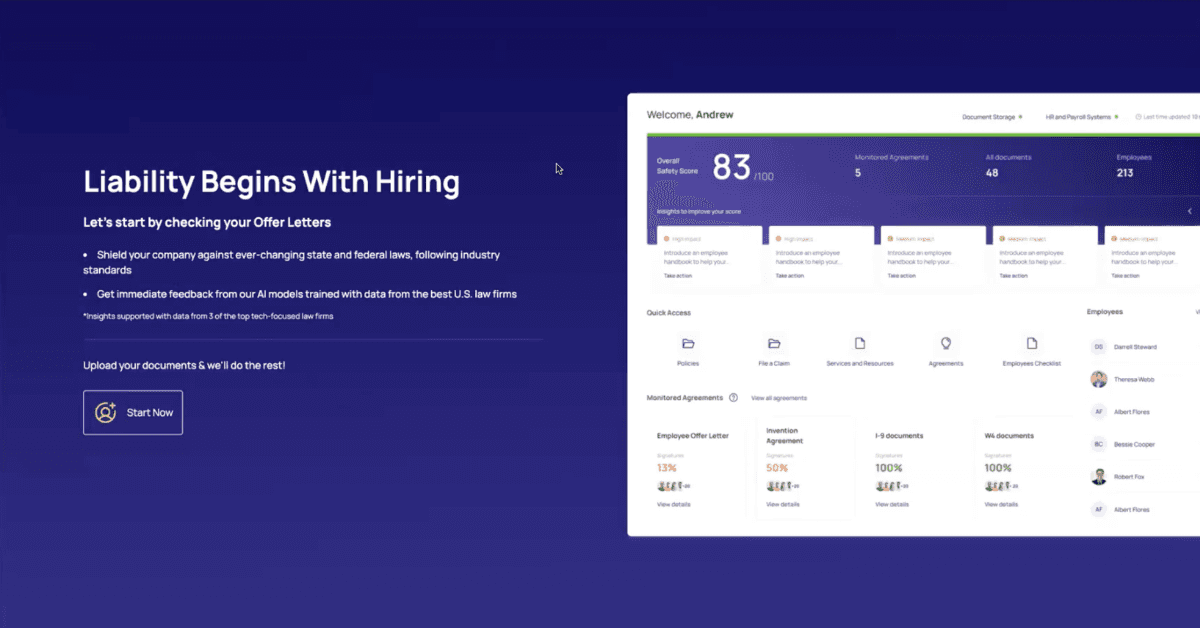
Anzen is an AI platform for commercial insurance agencies, automating submission routing, quote analysis, and proposal generation across 130+ carriers.
I joined as a fractional design advisor — no execution, strategic direction only — and stayed for 22 months as the product evolved from an HR compliance tool into an AI-driven commercial insurance platform.
HOW I DID IT
THE FOUNDATIONS
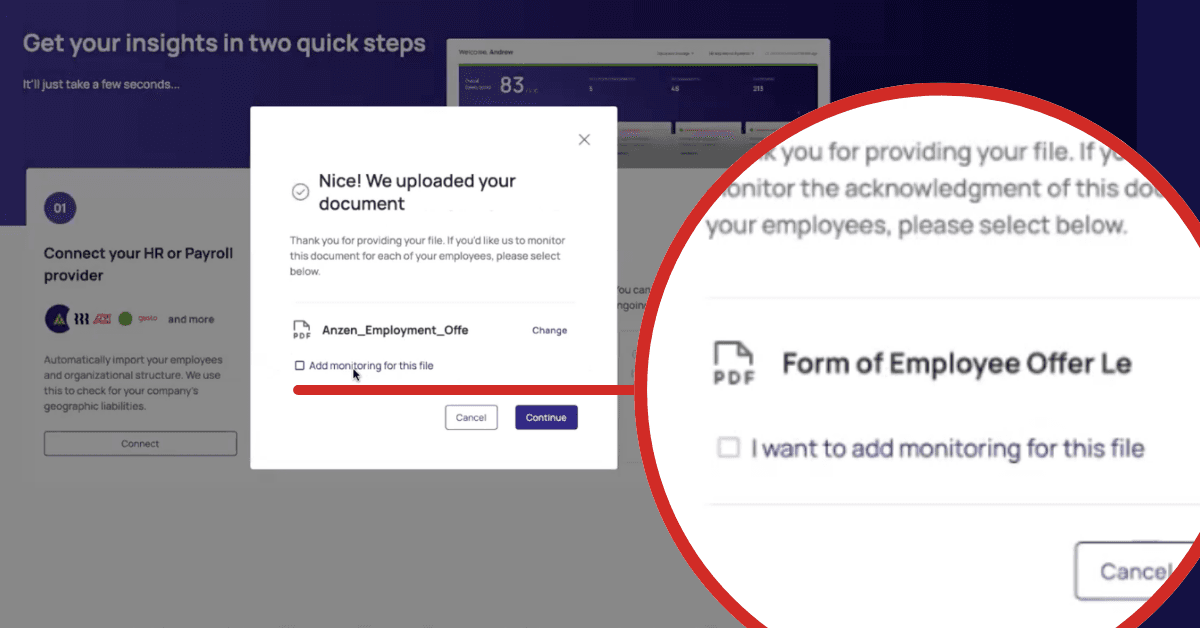
Anzen came through an investor referral in November 2022. The founder knew design was important, but couldn't yet define what was wrong with it. They’d engaged a UI design contractor, who had gotten them this far, but now they needed to layer in systems-level thinking. That's where I came in.
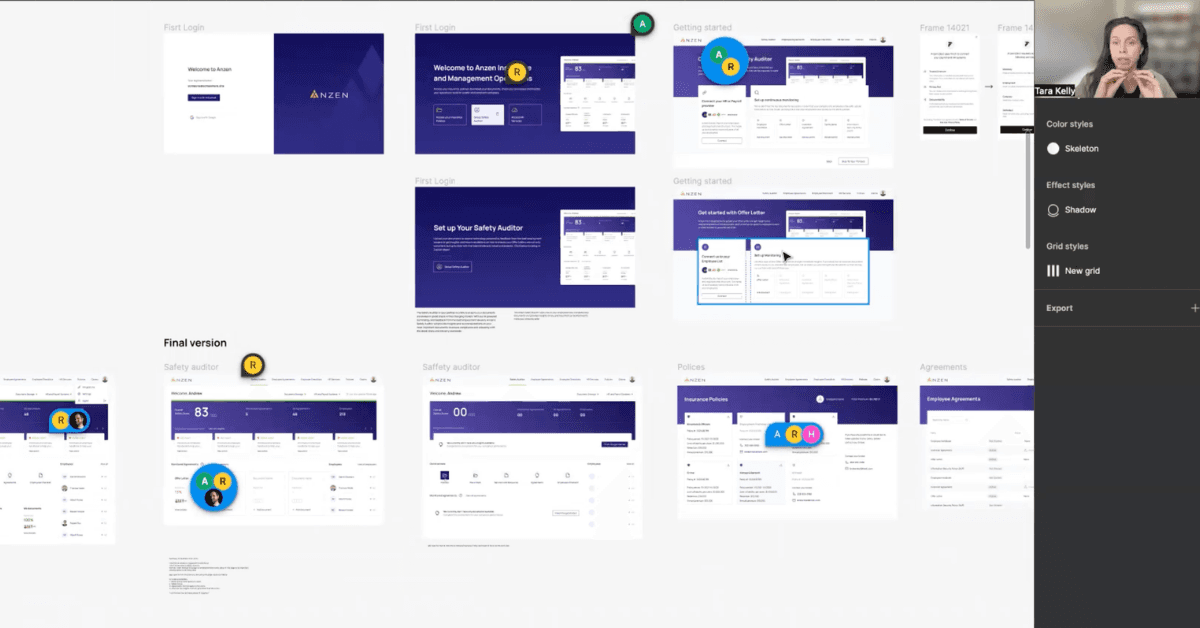
We engaged via one-hour calls, twice a month. These were intense working sessions, primarily with the PM, meant to drive the product forward.
Advisory work compounds when the team starts applying the same thinking between calls. Over the first ten months, the goal wasn't to solve problems for them, it was to change how they approached problems themselves.
Building Capabilities, Not Just Answers
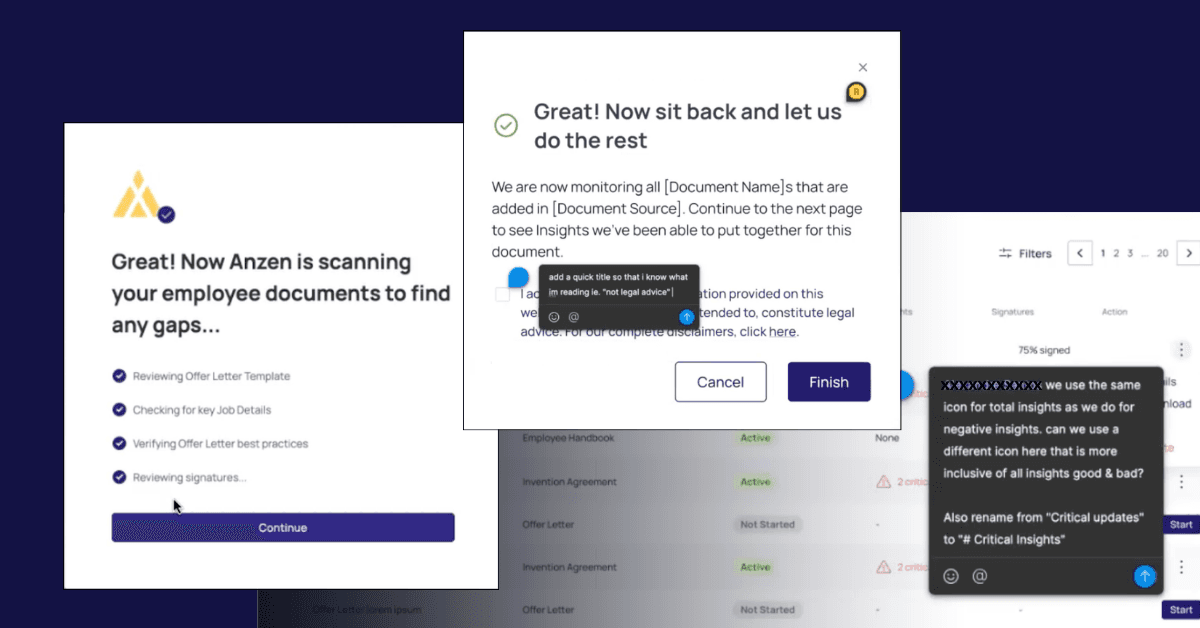
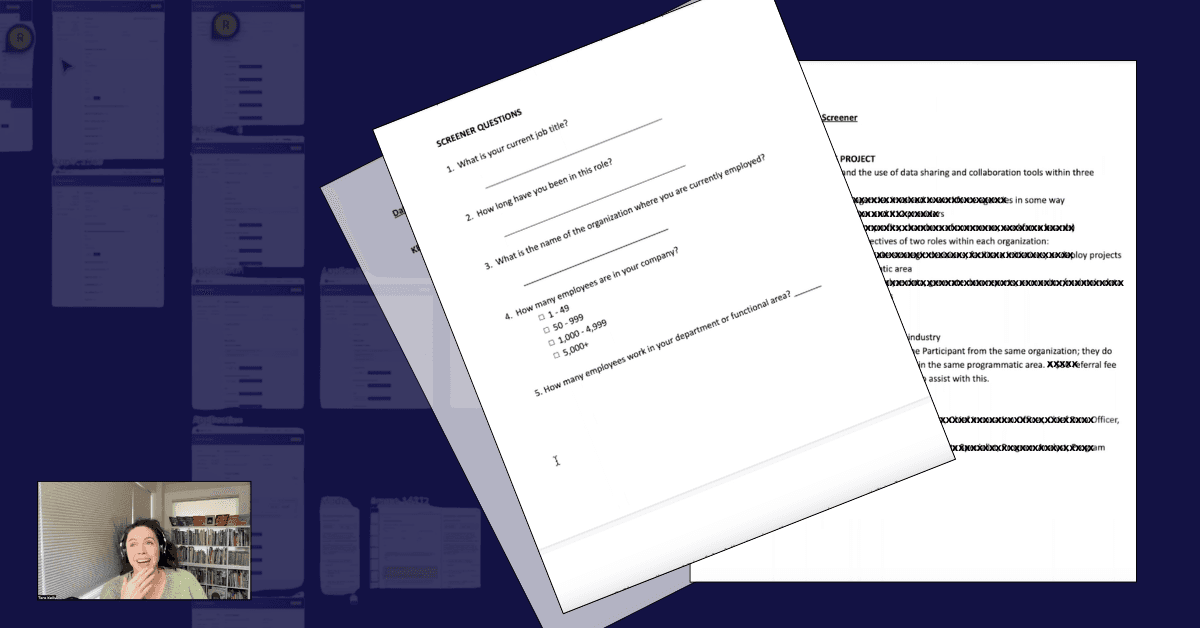
When the team needed to run user research, the easy move was to design the study for them. Instead I coached them through recruiting, research briefs, session structure, and prototype framing.
They ran every subsequent round better, and started framing design problems with a researcher's instinct even when no research was underway.
Two hours a month is a forcing function for the kind of thinking that actually moves a product forward.
Here's a few key topics I coached them in.
—> Finding upstream causes, not fixing visible symptoms.
—> Building a research practice from scratch.
—> Testing and validating market positioning.
A Major Pivot: Designing for AI
In late 2023 Anzen pivoted into commercial insurance. New users, new workflows, new technical architecture.
The work shifted to designing AI-powered workflows into their core operations.
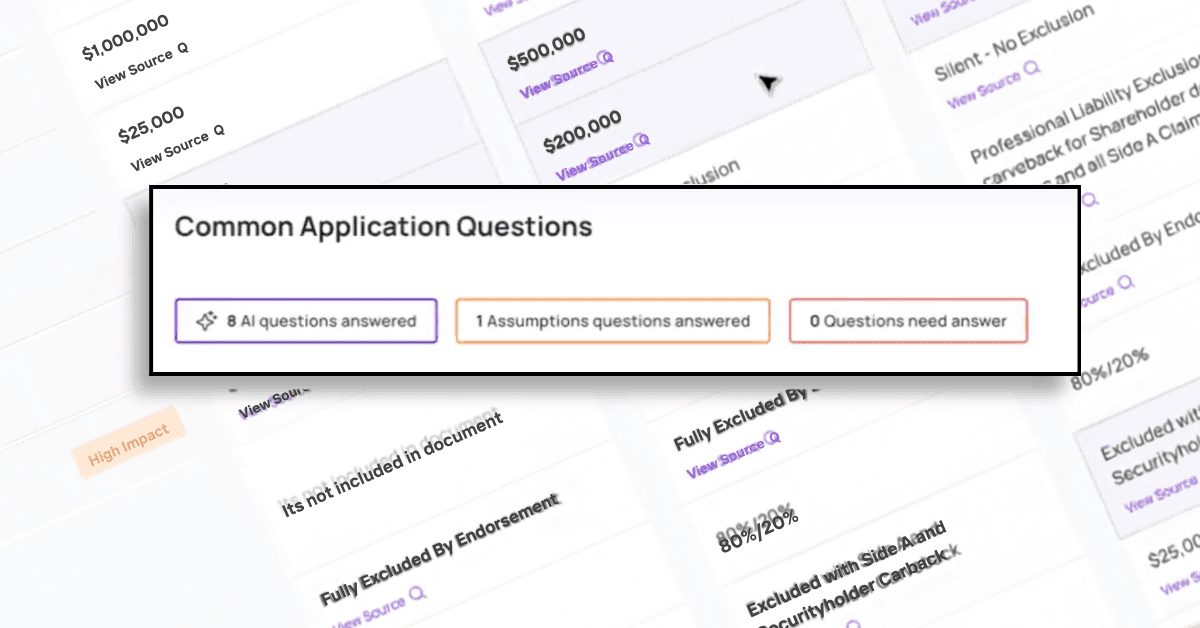
The first project was a document comparison tool that extracted structured insights from dense insurance policies and presented them side by side for human decision-making.
The design supported different permissions, customizable branded outputs, and trust in model-generated content. That last part was the key: users were acting on model-generated content, and they needed to trust it.
Business Impact
22 months, two product evolutions, one AI platform shipped.
The team built a research practice they owned and ran independently long after the engagement ended. The engagement ended when the company was ready to hire a full-time senior designer, which was the goal from the start.
Anzen today serves 200+ agencies across 130+ carriers, operating as a fully AI-driven commercial insurance platform.
From HR
compliance tool to AI platform
ready to serve
200 agencies.
CONTEXT
HR Compliance / Commercial Insurance, B2B SaaS
ROLE
Fractional Design Lead
KEYWORDS
Data Viz, Decision Support,
Design System
RESULTS
Enabled core growth drivers
Anzen is an AI platform for commercial insurance agencies, automating submission routing, quote analysis, and proposal generation across 130+ carriers.
I joined as a fractional design advisor — no execution, strategic direction only — and stayed for 22 months as the product evolved from an HR compliance tool into an AI-driven commercial insurance platform.
THE FOUNDATIONS
Anzen came through an investor referral in November 2022. The founder knew design was important, but couldn't yet define what was wrong with it. They’d engaged a UI design contractor, who had gotten them this far, but now they needed to layer in systems-level thinking. That's where I came in.
We engaged via one-hour calls, twice a month. These were intense working sessions, primarily with the PM, meant to drive the product forward.
Advisory work compounds when the team starts applying the same thinking between calls. Over the first ten months, the goal wasn't to solve problems for them, it was to change how they approached problems themselves.
Building Capabilities, Not Just Answers
We had a lot of work to do, and we needed to buy time. I had a lot to learn about users, and the product need a more flexible back-end.
I opted for a strategically timed declutter. I proposed a deliberately narrow usability intervention: a heuristic review to reduce visual clutter and clarify information hierarchy.
This minor change accomplished a lot for everyone:
→ Customers saw product progress
→ Design and engineering working
together for first time
→ Sales reengaged with customers
up for renewal
→ Allowed me to recruit users for
UX research
→ Made space for research and real
redesign
Two hours a month is a forcing function for the kind of thinking that actually moves a product forward.
Here's a few key topics I coached them in.
—> Finding upstream causes, not fixing visible symptoms.
—> Building a research practice from scratch.
—> Testing and validating market positioning.
A Major Pivot: Designing for AI
In late 2023 Anzen pivoted into commercial insurance. New users, new workflows, new technical architecture.
The work shifted to designing AI-powered workflows into their core operations.
The first project was a document comparison tool that extracted structured insights from dense insurance policies and presented them side by side for human decision-making.
The design supported different permissions, customizable branded outputs, and trust in model-generated content. That last part was the key: users were acting on model-generated content, and they needed to trust it.
Business Impact
22 months, two product evolutions, one AI platform shipped.
The team built a research practice they owned and ran independently long after the engagement ended. The engagement ended when the company was ready to hire a full-time senior designer, which was the goal from the start.
Anzen today serves 200+ agencies across 130+ carriers, operating as a fully AI-driven commercial insurance platform.
From HR
compliance tool to AI platform
ready to serve
200 agencies.
CONTEXT
HR Compliance / Commercial Insurance, B2B SaaS
ROLE
Fractional Design Lead
KEYWORDS
Data Viz, Decision Support,
Design System
RESULTS
Enabled core growth drivers
Anzen is an AI platform for commercial insurance agencies, automating submission routing, quote analysis, and proposal generation across 130+ carriers.
I joined as a fractional design advisor — no execution, strategic direction only — and stayed for 22 months as the product evolved from an HR compliance tool into an AI-driven commercial insurance platform.
SECOND MEASURE:
CASE STUDY
THE FOUNDATIONS
Anzen came through an investor referral in November 2022. The founder knew design was important, but couldn't yet define what was wrong with it. They’d engaged a UI design contractor, who had gotten them this far, but now they needed to layer in systems-level thinking. That's where I came in.
We engaged via one-hour calls, twice a month. These were intense working sessions, primarily with the PM, meant to drive the product forward.
Advisory work compounds when the team starts applying the same thinking between calls. Over the first ten months, the goal wasn't to solve problems for them, it was to change how they approached problems themselves.
Building Capabilities, Not Just Answers
We had a lot of work to do, and we needed to buy time. I had a lot to learn about users, and the product need a more flexible back-end.
I opted for a strategically timed declutter. I proposed a deliberately narrow usability intervention: a heuristic review to reduce visual clutter and clarify information hierarchy.
This minor change accomplished a lot:
→ Customers saw product progress
→ Design and engineering
working together for first time
→ Sales reengaged with
customers up for renewal
→ Allowed me to recruit
users for UX research
→ Made space for research
and real redesign
Two hours a month is a forcing function for the kind of thinking that actually moves a product forward.
Here's a few key topics I coached them in.
—> Finding upstream causes, not fixing visible symptoms.
—> Building a research practice from scratch.
—> Testing and validating market positioning.
A Major Pivot: Designing for AI
In late 2023 Anzen pivoted into commercial insurance. New users, new workflows, new technical architecture.
The work shifted to designing AI-powered workflows into their core operations.
The first project was a document comparison tool that extracted structured insights from dense insurance policies and presented them side by side for human decision-making.
The design supported different permissions, customizable branded outputs, and trust in model-generated content. That last part was the key: users were acting on model-generated content, and they needed to trust it.
Business Impact
After launch, analysts could independently explore performance, comparisons, and industry trends without relying on sales or data teams.
We turned a cost center to an innovation driver:
→ Basic analysis requests gone
→ Sophisticated ones became
new product features
For the business, the redesigned system grew with us to our $10M ARR goal by enabling speedier sales conversations and easier renewals.
From HR
compliance tool to AI platform
ready to serve
200 agencies.
ANZEN: CASE STUDY
design LEADERSHIP ACROSS 2 Years, 2 products, and an AI platform built from scratch.
design LEADERSHIP ACROSS 2 Years, 2 products, and an AI platform built from scratch.